May 25th, 2025RDA: Developing abilities, enriching lives

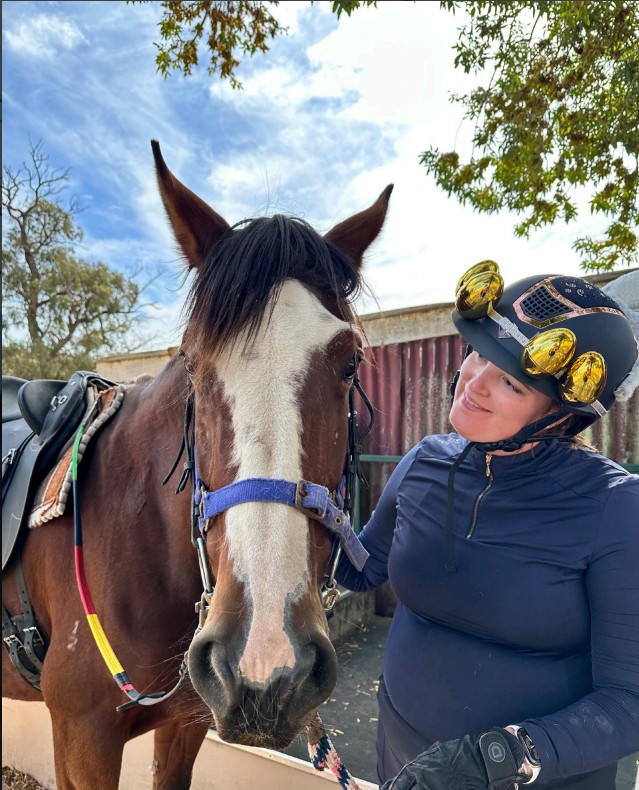
Lauren Eagle joined Riding for the Disabled in January 2021 after seeing an article in The Local. It was just after Covid and as with many organisations, a lot of volunteers had left during that period.

“Several of us responded to that article and we’re still there today, so that’s how I got involved. And I wanted to reconnect with horses and the horse environment because I’d had horses when I was young but not much as an adult rider.
“It was a fantastic way of working with people with disability volunteering as well as getting my fix on the horses. “And I love it, it’s my happy place and I think I’m probably speaking for the volunteers that are there too, because we’ve been there all that long.
“For me, it’s the interaction with horses again. But it’s also about seeing how the riders improve each term. Sometimes you can see it weekly but mostly you can sort of see it term by term.
“It builds a lot of confidence and trust between the rider and the horse and the volunteer and that’s why consistency is important. Volunteers really need to be there most Fridays so that that relationship can be built up, and the trust and the comfort level can be built up, particularly from the riders, but also horses.”
Lauren said horses were very empathetic and could quickly pick up what a rider was like, as well as volunteers.
“One of the riders says that he can almost feel what the horse is thinking so that is very symbiotic. The horse always picks up on the rider, their ability, their weight distribution, and they just seem to adapt accordingly. They’re amazing. Equine therapy is fantastic.”
Lauren said experience with horses was helpful but not essential. Some volunteers lead the horses while other are sidewalkers and interact more with the rider.
“They walk beside the horse and rider so they’re more rider-focused and the more physically disabled the person is, the more sidewalkers are required.”
The commitment for volunteers is every Friday during terms 1, 2 and 4, from 1pm to 5.30pm at Boomerang Ranch in Daylesford. That allows for three one-hour sessions and then a cuppa afterwards for a debrief. Generally, the same volunteer works with the same rider and horse to build up familiarity.
There’s also taking part in the Daylesford Show and the occasional trail ride. Lauren said the highlight of volunteering was seeing the riders improve and build their confidence and self-esteem and that its rewarding to get feedabck from parents and carers telling of the positive changes that have happened for their riders. The activities are tailored to the ability of the rider.
“The kids love doing the games and trying to catch the volunteers, while others are getting ready for different competitions. And riders range in age from primary school students to seniors in their eighties.”
“Some have physical disabilities and others have cognitive or sensory disabilities. We have to adapt to each rider differently because each rider is different.”
Lauren said it was the overall camaraderie, and working with volunteers from teenagers to those in their seventies that she really loved.
“It’s also important for people thinking about volunteering that safety for everybody involved is paramount. The horses used in the program undergo an assesment and are all RDA approved. And volunteers are offered training and support”.
For more details email rdadaylesford gmail.com