October 8th, 2026Rolling since 1899

Gold was discovered in the area now covered by Lake Daylesford in 1851, and within a year the town had been surveyed and settled.
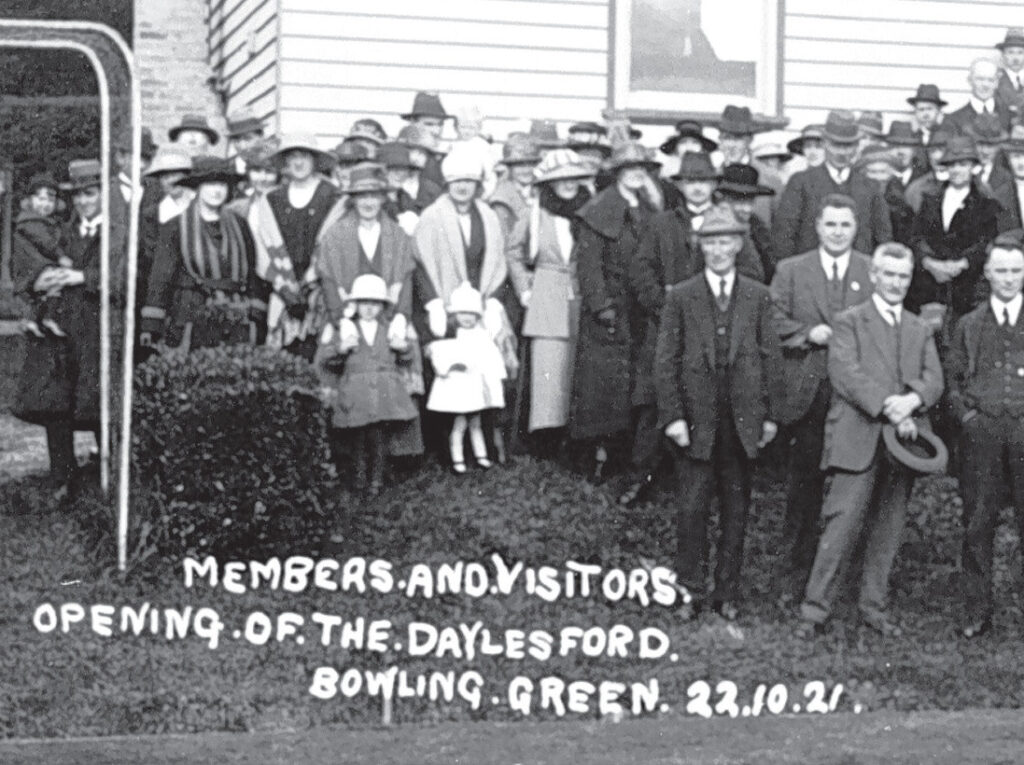
By 1859, around 3400 diggers were working the local fields. The alluvial gold ran out, the railway arrived in 1880, and Daylesford reinvented itself as a fashionable spa resort. By 1899 it was a town that had arrived. A bowling club felt entirely appropriate.
The Daylesford Bowling Club was established on April 17, 1899 and officially opened on December 20, 1899, with 64 founding members. The club’s first president was J. Wheeler and the first secretary was J. Anderson. Sixty-four members in a town still finding its post-gold-rush feet is a statement of community intent, and the club wasted no time embedding itself into the fabric of Daylesford life.
The club wasted no time making the pages of the local paper either. The Daylesford Advocate, which ran from 1878, carried a notice in its December 1899 edition reporting that the annual Christmas tourney was set down for 25th, 26th and 27th December, for pairs, two bowls and 21 up, with handicap behind scratch. Some £15 worth of trophies were up for competition. The honorary secretary inviting all comers was J. Anderson, the same man listed as founding secretary just months earlier. Clearly not one for sitting still.
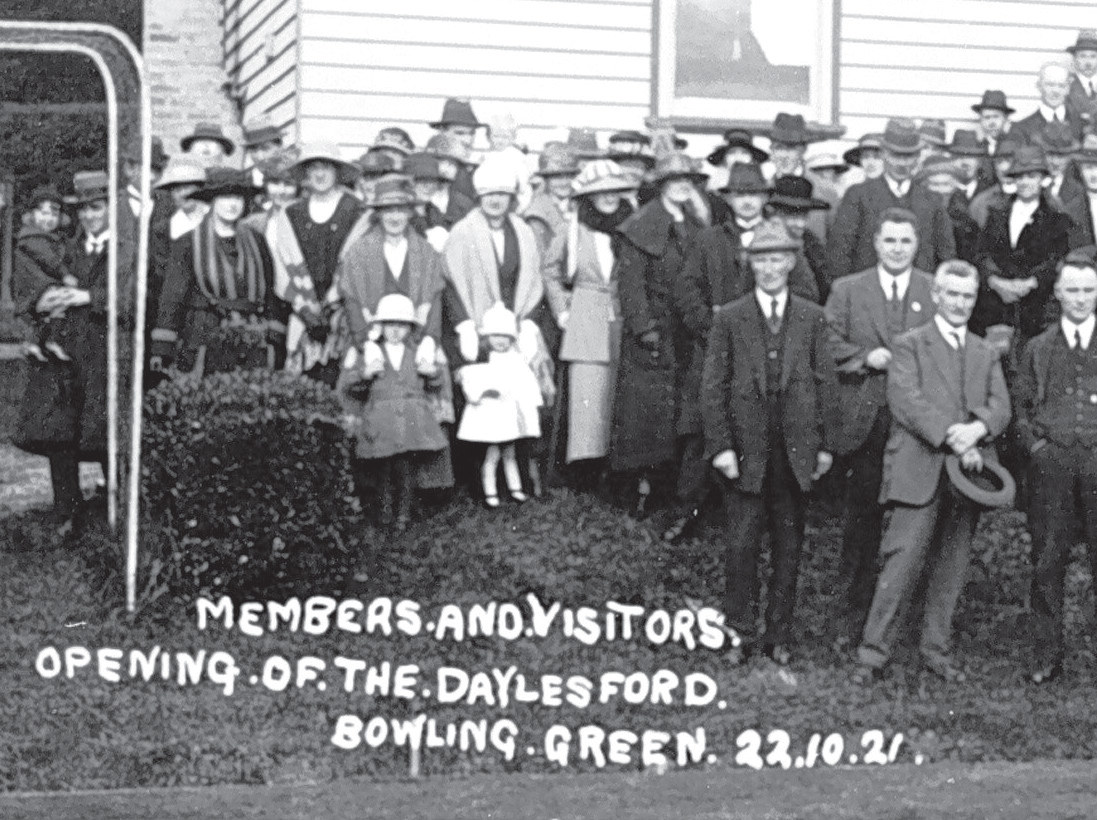
By 1904, the club had joined the Northwestern District Bowling Association, formalising its place in the regional competition structure. Then in 1907 came a merger that tells you a great deal about how these community clubs functioned. The Daylesford Bowling Club combined with the Daylesford Tennis Club to become the Daylesford Bowling and Tennis Club, creating a genuine all-season sporting hub. The bowling club brought four rinks. The tennis club, which had originally operated in Hospital Street near Jamieson Street, contributed two asphalt courts. Together they built something bigger than either could manage alone.
What made the club work was what happened off the green – the early clubhouse featured a tea kiosk and a club room with two billiard tables, and through the winter months the space came alive with socials, dances and euchre nights. Not just a place to play sport, but a place to actually be together.
By 1927, the numbers had settled into a comfortable rhythm – 43 bowlers and 45 tennis players, a community of nearly 90 active members built around two greens and two courts on a hill above the town. That same year, a Dr Adam was crowned the first Club Champion, a name that sits in the club’s records as one of those small human anchors that make history feel real rather than archival.
The tennis and bowls club partnership lasted about 40 years, until around 1949, when the tennis club outgrew its two courts at Camp Street and the tennis committee had a bigger vision for their own clubrooms and their own grounds. A house was removed from Italian Hill and shifted to a new site in West Street, where it would become the frame of a clubhouse that still stands today. The partnership quietly dissolved, and the tennis players headed down the hill to start the next chapter.
The club’s address at 8 Camp Street is itself a piece of history – Camp Street was the original centre of Daylesford’s colonial development, the location of the gold commissioner’s camp from which the early town radiated outward.
More than 125 years later, the Daylesford Bowling Club sits on the same Camp Street site with a membership of around 70 bowlers, one grass green and a new synthetic green that opens the door to year-round play.
The synthetic green is the latest chapter in a story of sensible adaptation. The tea kiosk became a bistro and the billiard tables and euchre nights gave way to a sports lounge. The two asphalt tennis courts are long gone, but the instinct that drove the 1907 merger, the idea that a community is better served by a club that does more and welcomes more, still shapes how the place operates.
The bistro is now famous in its own right; people who have never rolled a bowl in their lives make their way up Camp Street for the Parma Night and the views across Daylesford. Which is, in its own way, exactly what the tea kiosk and the billiard tables were doing in 1899, drawing the people in and giving them a reason to stay.
Sixty-four founding members in a Victorian spa town. A century and a quarter later, still rolling.
Words: Dianne Caithness & Kyle Barnes | Images: Contributed