July 30th, 2026Showcasing the potential of properties

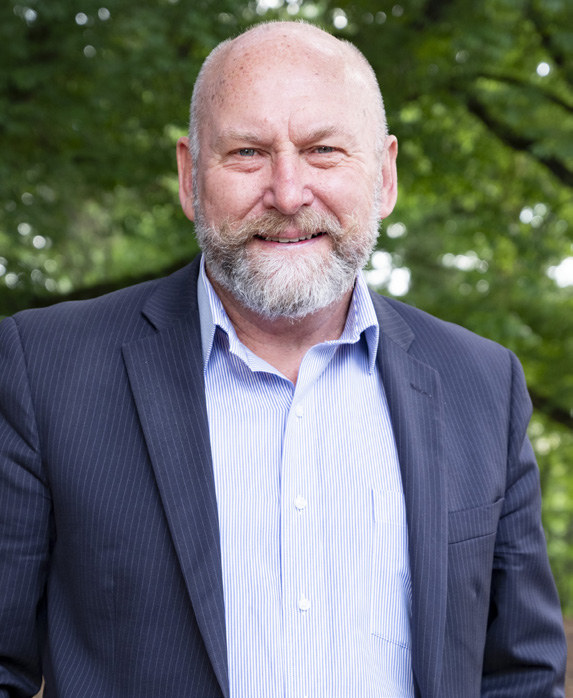
Lise Heymer is an experience designer who spent more than two decades creating digital experiences before turning her focus to physical places, with a single mission – helping people gain clarity before making significant decisions about place. Based in Coomoora, she recently founded Heymer Design Studio, a place-based design practice.

“One service that I’m creating is offering vendors and property owners the chance to see the potential of their properties, and how it could be applied into different areas,” she said.
“For example if someone wants to renovate or uplift their property, I can help them with discussion and understanding about what they are intending to do and helping them with a visual representation of what the future for that property could be.”
“And that could be either if they want to actually stay with the property and renovate or it could be to prepare the property for sale, to increase their chances for sale, or even a visualisation that they can use in incorporating it into the property marketing.”
“The way I work is first to visit the property and understand what people are trying to achieve. If there are no plans, I create simple architectural drawings to define the space. From there, I develop design concepts that explore how the place could evolve, and three-dimensional models where those ideas come to life. Once the project is finalised, AI becomes the final step, giving those concepts a realistic photographic finish.”
Lise, who moved to Australia from Brazil in 2016, now lives in Victoria with her husband, a software engineer. Said she had been looking for a place with a beautiful lifestyle and connection to nature, but also a place that was alive.
“I wanted to live with wellness as a priority in my life and beautiful cafes and restaurants and places to visit, wineries and everything this region offers. I love it.”
The schoolhouse
Lise talks about her experience rendering the historic Glenlyon Schoolhouse – which brought her in touch with The Local and Donna and Kyle.
“A home is never just a house. It is an extension of how we live, and the places we inhabit directly shape the lives we lead.
Six years ago, when I left my apartment in Sydney to buy a home in Queensland, I realised I wasn’t just moving house – I was chasing a new life. I wanted to be closer to nature, embrace a slower pace, have a room for my artwork, a backyard to gather with family and friends, and space for my pets to roam. It was a journey of transformation through place that has continued ever since.
Moving has been a constant throughout my life. Since leaving my parents’ home, every place I’ve lived and every place I’ve visited has taught me something. Last year, that journey brought me to beautiful regional Victoria and inspired another transformation. After more than two decades in experience design, I found myself transitioning my work from the digital world to the real one.
I am fascinated by historic and old houses, lifestyle properties and businesses, the potential of places, and the memories we build within them. Whether that’s a quiet afternoon with family, a gathering of friends, or a business welcoming guests, I’m interested in how places quietly shape the experiences we take away from them.
It was this fascination that led me to the historic Glenlyon Primary School after a kind introduction from the wonderful Will Walton and Connie Conlon who immediately thought it was a property I’d fall in love with.
More than a heritage-listed building, the Glenlyon Primary School is a place where generations have gathered, connected and created memories for more than a century.
Today, it continues to thrive through care as a much-loved home inviting family and friends to experience a place that still holds so much of its original character.
Long before I arrived, the schoolhouse already had a story, a story of meaning and memory. The historic building claims its presence quietly. Standing along the main street, it doesn’t demand attention, yet it’s almost impossible to drive past without noticing it.
There is a solid, grounded poetry to a building that has outlasted generations. It carries the textures of the past while quietly inviting us to imagine what might come next.
My role was to observe, listen and understand what this place was quietly asking to become. When I first visited the Glenlyon Schoolhouse, I wasn’t searching for ideas; I was searching for clues.
Like many historic properties, some of its greatest qualities had become so familiar over time that they were almost invisible – the generous deck overlooking the landscape, the treehouse tucked among the trees, the fire pit inviting conversation long after sunset, the creative studios, and the wide windows framing the changing seasons.
None of these elements needed to be invented. They were already there.
What fascinated me wasn’t what the property lacked, but everything it already offered. As I walked through the grounds, I found myself asking a different question: How could these experiences become more visible? The answer wasn’t to redesign the property, but to gently reveal what already existed.
The design concepts that followed were deliberately restrained. Rather than introducing dramatic new features, they focused simply on strengthening the relationship between people and place.
Simple pathways clarified movement through the garden, while thoughtful lighting extended the experience into the evening. Defined outdoor rooms made everyday moments easier to imagine, and the introduction of productive gardens suggested a slower, more intentional rhythm of living. Small refinements helped each part of the property express its purpose more clearly.
Individually, none of these changes were transformative. Collectively, however, they changed the way the place could be seen.
The visualisations were never intended to predict the future. They were an invitation to notice the possibilities that were already waiting within the Schoolhouse.
When Donna later told me that the work had made them ‘fall in love with the schoolhouse again’, I realised that was the real outcome of the project. Not because the property had become something different. But because it had become easier to see what had always made it special.”
Words: Kyle Barnes & Lise Heymer | Image: Lise Heymer