July 28th, 2025Talkin’ ’bout my g-g-generation…

Talkin’ ’bout my g-g-generation
The Who sang “hope I die before I get old”.
Oops – too late, says Jeff Glorfeld
One year ago my mother sold her home and moved into an “assisted living” facility. But that’s not where this story starts.
Eight years ago, she and my father sold the family homestead and moved into a “manufactured home” in a community for residents older than 55 years – an up-market trailer park. But that’s not where this story starts.
Thirty years ago my mother and father signed up for something called long-term care insurance. Every month they paid premiums on two policies, and year by year those policies grew. But that’s not where this story starts.
It starts 75 years ago; my grandparents – my mother’s parents – moved from Los Angeles in southern California to Redding in rural northern California. They bought 16 hectares of rocky hard scrub land and built a house with their own hands.
Grandma died young: stroke, hospital, gone. Grandpa remarried, smoked and drank and died, without much lingering. His wife didn’t smoke or drink and lived on, and on, and on. Dementia set in, and my mother, with a husband and three young children of her own to manage, had to find care for her. In-home help was elusive and the quality was poor to adequate. There were places called nursing homes, which amounted to a hospital bed, minimum staff interaction, and not much else. Money was an issue – the family wasn’t poor and wasn’t wealthy and, anyway, private facilities weren’t readily available.
My mother learned a lot, finding care for her father’s wife, knowledge she used when called upon to manage the final years of her two elderly aunts. The key lesson was that she was not going to end up like those old women, in institutional facilities and relying on the ministrations of family members. Hence the long-term care insurance.
My parents took over the family property, and when the land and stairs became too much, moved into their up-market trailer park. My wife Carol and I left Australia in 2018, bought the homestead, and assumed responsibility for my parents’ wellbeing, with the aid of their by now substantial long-term care insurance.
It took work to get to grips with the policies, but soon enough we hooked up with an in-home healthcare company. My father was in poor health and my mother is extremely demanding but we finally were linked up with some good care-givers. One woman came in Monday to Friday from 9am to 5pm, and another worked four hours a day on Saturdays and Sundays.
Both women had low-level nursing qualifications that allowed them to help my parents shower and dress. They could make certain that they took all their medications but they couldn’t handle the medications – that job fell to me or my brother. My dad became completely incontinent so the nursing daily duties included cleaning him and making up the beds and doing laundry.
Both caregivers were required to fill out daily reports on their activities because the insurance company had strict criteria regarding the services they would pay for. It was considered a viable task for them to help my parents eat meals but not to prepare them. Which, as it turned out, was what my parents required the most. Both women were happy to bend the rules and prepare meals but neither had any culinary abilities. But that worked out all right because it gave my mother, an accomplished cook in her time, nearly endless opportunity for complaint and criticism.
The cost of these services was not cheap but my parents had amassed a good amount of money in their long-term care policies.
My father died in February 2024 – he was 93 and his passing was mercifully quick. My mother decided she could no longer justify having full-time in-home care, and, with her eyesight failing, she didn’t fancy staying in her house alone, and she didn’t want to live with me and Carol, so she asked me to look into care facilities.

Redding, California is typical of many medium-size cities, full of old geezers. One of the only growth industries around here is in geriatric healthcare. With a population of 92,000 people, the area has 18 facilities offering various levels of “assisted living” care.
We settled on one of the older, smaller developments, which offers assisted living and the opportunity to transition to the next stage of ageing life, memory care, for those dealing with the onset of dementia. It has studio and one-bedroom apartments, and just a few with two bedrooms. Not many couples survive intact into old age, and where my mother lives most of the 150 or so residents are women.
My mother rents an unfurnished one-bedroom apartment. Her living space, filled with her own possessions from her previous homes, is comfortable and is combined with a kitchen of sorts that has a sink, fridge, microwave and storage space.

All the residents have a 24/7 call-button, which they carry at all times. It can be used for anything from a health emergency to needing help reading the label on a jar.
We have taken the option of having staff manage her medications. Meals are from a cafeteria, serving wholesome but institutional-type food, which is a problem for my mother, who has extremely specific likes and dislikes. There is a library and an exercise room, lovely grounds with paved footpaths, and ongoing social events. For this she pays $US7000 a month.
For the last five years of his life my father was not capable of taking care of himself. For my mother it’s been more like three or four years. He died in a hospital but generally speaking he lived his final years at home. My mother still lives “independently”. None of that would have happened had they not had the foresight to plan for it, decades in advance. There is no safety net in the US for growing old.
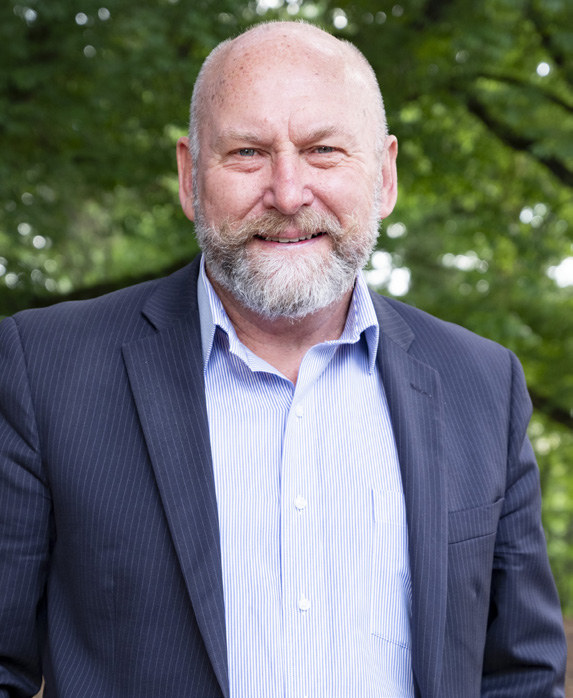
After many happy years living in Victoria and working at The Age, former Wheatsheaf resident Jeff Glorfeld, and his wife Carol, went back to California, the land of his birth, where in the past seven years he has survived bushfires, snowstorms and drought. And Trump. And Covid. And Trump again. The cicadas and locusts didn’t arrive. Well, not yet. Jeff is also the voice behind The Down Under Hour which is broadcast every Wednesday at 1pm, in California, on radio KKRN 88.5FM. The show can be live-streamed at KKRN.org In Victoria that’s 7am Thursday. Several programs have been archived on the website.